When we type a word into google, we generally don’t think about how much companies pay to ensure that word generates their ads at the top of the search results. Thanks to a study conducted by Wordstream, a company whose software helps users create search engine marketing campaigns, we now know which keywords garner the highest costs per click (CPC for those in the know) in Google AdWords. For over a decade Google’s AdWords solution has allowed companies to create ad campaigns on google’s search results and participating websites and bid on which keywords lead users to those campaigns. Considering advertising makes up 97% of Google’s total revenue, or 33.3 billion dollars a year, selling these keywords is an integral part of Google’s business model.
Wordstream, a pay-per-click software company, recently study compiled the top 10,000 keywords into categories by weighting the number of keywords within each category and the estimated monthly search volume and average cost per click for each keyword. The results aren’t as exciting as the most searched for keywords on google, (which mostly involve celebrity scandals, current events, and the weather) but they still reveal some interesting trends.
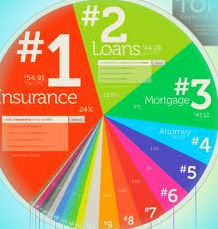
Insurance – $54.31 per click
It turns out ‘insurance’ ranks number one for CPC. That in itself is an astonishing number considering the millions of people who see these ads every day. Keywords in this category include ‘auto price quotes’
Loans – $44.28 per click
Following close behind are ‘loans’, a category that includes ‘consolidate’, ‘graduate’, and ‘student’. The emerging trend here reveals the type of company that can afford to spend a lot on advertising since they’re able to acquire consistent revenue from their customers over the course of their lives.
Mortgage – $47.12 per click
Keeping in mind these figures correspond to the number of keywords in the top 10,000 keywords that belong to that category, Mortgage come in third. Keywords include ‘refinanced’, ‘second’ and ‘mortgages’.
Attorney – $47.07 per click
Continuing the trend of either borrowing or spending large amounts of money for major life activities, ‘attorney’ ranks 4th, with keywords like ‘personal injury attorney’.
Credit – $36.06 per click
It comes as no surprise that ‘credit’ makes it on the list, as well all know credit card companies are constantly looking for new card holders. ‘home equity line of credit’ is an example of a keyword that would generate ads from this category.
Facebook is dramatically redesigning its users’ profile pages to create what CEO Mark Zuckerberg says is a “new way to express who you are.”
SAN FRANCISCO: Facebook is dramatically redesigning its users’ profile pages to create what CEO Mark Zuckerberg says is a “new way to express who you are.”
Zuckerberg introduced the Facebook “timeline” on Thursday in San Francisco at the company’s f8 conference for some 2,000 entrepreneurs, developers and journalists. The event is also being broadcast to more than 100,000 online viewers.
The timeline is reminiscent of an online scrapbook, with the most important photos and text that users have shared on Facebook over the years. It’s Facebook’s attempt at growing from an online hangout to a homestead, where people express their real selves and merge their online and offline lives. The timeline can go back to include years before Facebook even existed, so users can add photos and events from, say 1995 when they got married or 1970 when they were born.
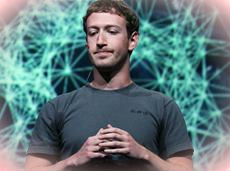
Zuckerberg took the stage after a humorous skit, in which actor Andy Samberg impersonated him. The real Mark Zuckerberg looked considerably more playful and at ease than he has in past events, suggesting he is growing into his role as the public face of Facebook.
But he quickly got down to business as he introduced the timeline as “the story of your life – all your stories, all your apps and a new way to express who you are.”
Expanding on its ubiquitous “like” buttons, Zuckerberg said Facebook will now let users connect to things even if they don’t want to “like” them.
“We are making it so you can connect to anything you want. Now you don’t have to like a book, you can just read a book,” he said. “You don’t have to like a movie; you can just watch a movie.”
So it turns out that all of those changes Facebook unveiled earlier this week were just a taste of the massive overhaul that CEO Mark Zuckerberg unveiled today.
Facebook users reacted in strong negative fashion to the first wave, and now comments are rolling in after today’s announcements.
MORE: Follow USATODAYtech on Twitter
Among other things, the social network took the wraps off “Timeline” — an “evolution” of your Facebook profile that “will allow users to share photos, music, TV shows, movies and other content in real time,” according to a story by USA TODAY reporter Jon Swartz. Facebook struck deals with Spotify, Hulu, Netflix and other companies that will allow greater integration of their content into your Facebook experience.
Here’s a smattering of comments from around the Web:
On Twitter:
@Jsolow: “I think the Timeline is a great idea, very innovative – however, the Apps that utilize the GPS in your phone isn’t for me.”
@soulsole: “the timeline change is a great idea but the added verbs aren’t going to be useful”
@thebootlegsaint: “I’m pretty excited about it. With the explanation for new changes, I feel better about them. Timeline/Spotify seem great.”
@prebynski: “I am preparing myself for the sudden realization that I live a really lame life when I scroll through my Timeline. #f8″
@troy__himself: “Looks like Facebook has jumped the shark to me. I’m off to Google+ until Diaspora arrives #F8″
On Facebook:
Deanna Campbell: “HATE the changes…VERY confusing…..Hard to figure out and follow….Don’t like now I can see what my friends are doing without wanting to….”
Nathan Randal Brown: “Still, even with all the new features, there still has yet to be a DISLIKE button — the one thing facebook users have actually been wanting.”
On usatoday.com
dremod2899: “and some of us just want to post some pics and see what our friends are doing…..not one change that FB has made since i joined two years ago has made the experience for what i am looking for one bit better…it has only made it more confusing and harder to work with…..they should offer a FB Lite…..some of us do not have hours and hours of time to create profiles and friends lists nor do we want to…..”
M1sf1ts: “I refuse to put my life online. No Thanks.”
Basing on the prices received from car manufactures, the Forbes magazine has recently released the list of themost expensive cars of the year 2011. All the cars which have been named in the list have luxurious interior and futuristic design. Their maximum speed can reach over 400 km/h. Bugatti Veyron Super Sport, Koenigsegg Agera, Maybach Landaulet, Pagani Zonda C9, Hennessey Venomo GT, SSC Ultimate Aero, Ferrari SA Aperta and so on are considered as the most expensive cars of this year. Let’s have a look at the photos as follows to get more information about these luxurious cars.
Bugatti Veyron Super Sport: 2.6 million dollars
The new version of Bugatti Veyron Super Sport will be equipped with a W16 engine and 1200 horse power. Its fuel consumption is 10% smaller than a Bugatti Veyron 16.4 Grand Sport.
Maybach Landaulet: 1.4 million dollars
Featuring an AMG V12 5.0 liters twin turbo 604 horse power engine, smart head lights, bi-xenon, parking guide and etc, this Maybach Landaulet can reach the maximum speed of 447 km/h
Hennessey Venomo GT: 895,000 dollars
The body of Venomo GT will be made out of carbon fiber. The car will have the design of Lotus Elise and a V8 1,200 horse power engine. Its maximum speed can reach 445 km/h.
LeBlanc Mirabeau: 728,000 dollars
LeBlanc Mirabeau is equipped with a V8 engine, 700 horse power and 850 Nm torque. Its body is made out of carbon fiber. The maximum speed of the car is 370 km/h.
Rolls Royce Phantom Drophead Coupe is equipped with a V12 with direct injection and a maximum power of 453 horse power. Its maximum speed is 240 km/h.
Koenigsegg Agera: 1.5 million dollars
The body of Koenigsegg Agera is made of carbon fiber and aluminum. The car is powered a V8 910 horse power engine that can reach 100 km /h in less than 3 seconds.
Pagani Zonda C9: 1.3 million dollars
Pagani Zonda C9 will have Mercedes-Benz AMG V12 6.0 liters engine with 700 horse power and 1,000 Nm torque.
SSC Ultimate Aero: 750,000 dollars
The newest Aero model has a maximum speed of 440 km/h and a V8 1287 horse power. It is powered with air conditioning, electrical mirrors and windows, a premium audio system and so on
Ferrari SA Aperta: 520,000 dollars
Ferrari SA Aperta has a V12 670 horse power engine. It can go from 0 to 100 km/h in 3.5 seconds.
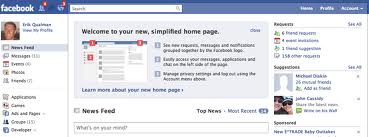
The social-networking power has revamped user profiles with a “top story” function that highlights the most relevant tidbits from friends, a Twitter-like news ticker on the right side of the page that offers real-time updates, and larger photos. (Facebook estimates its users post 250 million photos daily.)
The top story function is based on who posted, and the type of news (wedding, birth) shared.
“We’ve been experimenting with changes for a long time and think this will ensure that users do not miss out on things they care about,” says Keith Schacht, product manager for Facebook’s News Feed. “It makes the site more alive.”
The new Facebook look should be available to all of its 750 million users in a week or so, Schacht says.
Facebook’s announcement, in advance of what is expected to be a busy day at f8, is the latest broadside in its battle with Google+ for millions of consumers and — indirectly — advertising dollars. Facebook is expected to fold music and next-generation video into its service.
Much is at stake financially. Facebook is expected to rake in $4.27 billion in revenue this year — more than twice the $2 billion it rang up in 2010, according to market researcher eMarketer.
Dueling features in Facebook and Google+ have taken on the feel of a social-networking arms race, with plenty of technological tit-for-tat.
Earlier Tuesday, Google pre-empted Facebook’s news with a slew of new Google+ features. It also said Google+ is now open to everyone, after a nearly three-month closed-trial period.
The most important new feature is improved search.
Meanwhile, Hangouts, the Google+ multiperson video-chat component, will now let users take part in a Hangout chat session using a smartphone or tablet. For now, Hangouts’ new mobile feature is available only on Android devices.
Another new feature, called On Air, will let Google+ users broadcast their hangouts to the public for anyone to watch. In keeping with the Hangout theme, as many as nine other Google+ users can take part in the Hangout On Air.
“We are serious about having the best (social network) service, and we do not plan to slow down,” said Vic Gundotra, the Google senior vice president in charge of Google+. He said 100 changes and features have been added to Google+ since its debut in late June, and as many changes are planned over the next year.
Facebook plans to roll out a major redesign of user profiles at its f8 developer conference this week, Mashable has learned.
Details about the redesign are sparse, but two sources familiar with Facebook’s plans (who have asked to remain anonymous) have told us that the redesign is “major” and will make Facebook profiles nexuses for consuming content.
Here’s what we know so far about the profile redesign:
- The redesigned profiles will be more “sticky,” says one source. One of the goals of the new profiles is to get users to stay on them for longer.
- We already knew Facebook is launching a media platform at f8. However, we’ve also learned that the platform — which will include music and video from partner sites — will display the media content a user is watching or listening to on their profiles. Essentially, when you’re listening to Lady Gaga on Spotify, your friends can see and access that on your Facebook profile. This confirms a recent New York Times report.
- The redesigned profiles are part of a larger push into social ecommerce. We don’t exactly know what that means, but we’ve heard whispers that Facebook intends to give Facebook Credits more prominence. We’ve also heard that a Facebook app store may emerge at f8.
- Facebook’s push into ecommerce may be related Project Spartan, an HTML5-based mobile platform rumored to be launching soon.
Facebook is being tight-lipped about the changes; the company declined to comment on this story. However, more and more pieces of Facebook’s big launch continue to leak out as the excitement builds for f8 (feel free to send us screenshots if you have any) The company is currently under lockdown, trying to fix the final bugs before Thursday’s big launch.
Cinephiles rejoice! Deadline Hollywood is reporting that Ridley Scott has just signed on to direct and produce a new version of his sci-fi cult classic Blade Runner. The rights to the movie were acquired earlier this year, but up until now itapos;s been unclear whether Scott would be involved with the project. Scott has said that he would never remake Blade Runner, so many are speculating whether this film will be a sequel, a prequel, or something else entirely. At the moment, Scott is collaborating with Lost co-creator Damon Lindelof on Prometheus, which began as an Alien prequel but has morphed into its own story, using Alien as a jumping-off point.
3 Predictions for Social Good in 2011
The coming year will see more developments as technologists, activists and online communicators work together to try to address issues such as cause fatigue, delivering return on investment and harnessing new and challenging media forms.
Is Twitter a Touchdown for Social Good?
Twitchange lets fans bid on an opportunity to interact with their favorite celebrities on Twitter by having those celebrities follow, mention or retweet them.
5 Facebook Giving Campaign Success Stories
Most non-profits who successfully use social media see it as a tool to engage donors rather than make transactions. These five successful fundraising campaigns from brands and charities, however, found a way to do both at the same time.
Why the Web Is Useless in Developing Countries – And How to Fix It
The United Nation’s International Telecommunication Union estimated that at the end of 2010 there were 5.3 billion mobile phone subscriptions worldwide and that a full 90% of the world population now has access to a mobile network. In contrast, only about 2 billion people have Internet access.
HOW TO: Run a Global Charity Event From Your Laptop
Twestival is possible thanks to a suite of online tools, a little missed sleep, and an enthusiastic team of global do-gooders. Here’s a behind-the-scenes look at how it all happens.
HOW TO: Spend an Entire Year Giving to Charity
Try donating to a different charity every day for an entire year. Sounds hard, right? Well, it is, but that’s the exact goal that Carlo Garcia set for himself when he started Living Philanthropic, a one-year, one-man project to donate money 365 days in a row.
How MTV Is Marrying Digital Design & Social Good
MTV set out to create a crowdsourced, student-led, digital tool to help increase college completion rates by making it easier for students to navigate the financial aid maze.
HOW TO: Support International Women’s Day Using Social Media
Here you can find some interesting social good campaigns ranging from Twitter auctions to Daniel Craig dressed in drag (yes, really). The common thread, however, is the desire to not only “love” but to make an impact.
Hacktivism: Startup Mentality for the Non-Profit Sector
Hacktivism is the use of hacking and the startup mentality to tackle and support social good causes. Here’s a look at some of the minds behind hacktivism and ways that it is helping charities worldwide.
Can Charity Marketing Really Sell Cars?
Big corporations are waking up to social good in ways that make the most of the web. Well-publicized product launches, not typically where you’d expect to see social good crop up, are starting to include charitable collaborations.
How Social Media Can Reinvigorate Consumer Advocacy
What if we used those same dark arts and new technologies to actively shift our consumption away from mere products and more toward the consumer behavior and brands that are part of the solution?
Can One Website Bring Transparency to Online Giving?
Would you be more willing to give to charity if you knew exactly where that money was going? WePay’s financial platform has embraced the non-profit world by allowing for incredible transparency in its donations.
7 Ways To Celebrate #WorldWaterDay 2011 Online
If you’re looking to get involved and show your support for water sanitation issues world-wide, we’ve collected some ways that you can join in.
8 Ways To Help #Japan After the Earthquake
Social media has been no slouch with nearly countless campaigns aimed at donating money, supplies or lending support in any way possible.
Top Tech & Business Minds Try To Save the Oceans Shark Tag, You’re It is an online platform designed to bring in the best, most creative ways to help drive ocean conservation, drawing from a roster of top business talent.
The 7-Stage Evolution of a Socially Responsible Brand
Companies are starting to recognize the potential financial and reputational advantages they can gain by engaging with consumers around the shared ambition of building a better world.
Seven Ways to Help Tornado Victims
The death toll from the catastrophic tornadoes in the South has climbed to more than 340, with thousands injured, homeless, without power or clean water. How can we harness the power of social media to help?
HOW TO: Sustain a Social Movement After Initial Success
Whether it’s a huge protest, a victorious election, an ousted dictator or a momentous piece of breaking news, it’s more important than ever for movement builders and members to prepare for day two.
How Crowdsourcing Is Improving Global Communities
Here are examples of how individuals are taking part in crowdsourced microloans, direct funds and volunteer efforts aimed at bettering their communities.
What Does the Social Good Ecosystem Look Like? [INFOGRAPHIC]
This infographic offers a great overview of the social good ecosystem, including stats on U.S. online fundraising, average donation, fundraising method, motivation and type of cause supported.
How 5 Non-Profits Are Innovating With Mobile
Non-profits, both large and small, are using mobile to educate, activate, and engage audiences of all sizes. Here are five examples of non-profits rocking mobile for social good.
5 Amazing Charity Ads Shown at Cannes [VIDEO]
Good Work, a new program that pairs cutting edge (re: awesome) creatives with non-profits, has teamed up with the 58th Cannes Lions International Festival of Creativity for a YouTube contest.
HOW TO: Have the Cancer Talk
No one likes to have the sex talk with their kids, but it can be equally hard for kids to have “The Cancer Talk” with their parents.
Why Business Collaboration Is Necessary in a Socially Sustainable World
The corporate world is full of intellectual property and research departments that remain unnecessarily proprietary when they could be helping each other solve problems. There are four ways that companies can seek to collaborate.
HOW TO: Celebrate World Refugee Day
Check out the innovative ways they are employing free online tools and social media to take action on World Refugee Day.
Do Celebrities Really Help Online Causes?
More than ever, celebrities are pairing up with social good campaigns as a way to, presumably, help shine a light on some worthy causes.
5 Social Good Websites Aimed at Youth
Here are five major websites attracting young people who want to help the world and prove that “adolescence + Internet” can be a worthwhile equation.
How the Web Is Responding to the Horn of Africa Famine
While overcoming this humanitarian disaster — which the WFP calls the highest global humanitarian priority — will not be easy, thankfully creative attempts to help are sprouting up across the web
Community website COMMON has rounded up 10 promising startup initiatives that are using tech to do some social good.
What a Global Food Crisis Looks Like [INFOGRAPHIC]
Oxfam is putting the world food crisis right under your mouse. The organization has just released an interactive map showing how countries the world over are being hurt by high and volatile food prices.
5 Ways Museums Are Reaching Digital Audiences
From interactive SCVNGR challenges to crowdsourcing information about works of art, more museums are becoming digital savvy destinations. Here’s a look at some innovative campaigns.
4 Ways Non-Profits Can Jump Into Google+
We asked non-profit staff for their best practices experimenting with Google+ and their hopes for the future of the new social network. Here are four ways non-profits can make the most of the growing network.
Why Tech Is Key to the U.S. State Department’s Mission
Mashable had a chance to speak with Ross about the challenges of infusing diplomacy with technology, and the huge potential for social innovation in the near future.
5 Tips for Sparking a Grassroots Movement Online
Thousands and thousands of people are leveraging the power of community through social websites to create grassroots support. Here are five tips for sparking your own grassroots movement online.
It’s highly unlikely that a human could live forever. Even though the average human life expectancy has increased dramatically since the beginning of the 20th century, it won’t continue to double and triple until we’re living for hundreds of years. Some scientists believe that there is a hard-coded maximum life expectancy for humans, and it’s probably somewhere around 125 years old. One theory, known as the Hayflick Limit Theory, suggests that the cells in the human body may only divide and copy themselves a fixed number of times, and this limit puts a restriction on how long a person can survive. Once cells cease reproducing, organs and tissues become ineffective and shut down.
On the other hand, biological immortality is not necessarily impossible. One species of jellyfish, for example, known as the Turritopsis nutricula, seems to have the ability live forever by reversing its own aging process after sexual maturity [source: The Telegraph]. This type of discovery may provide comfort to futurists who hold out hope that human immortality is right around the corner. Scientists are hard at work developing pills and treatments that might add a few years to our life, but their search is hindered by how long human beings already live. It’s difficult, after all, to construct a scientific experiment or clinical trial that may last for more than a hundred years.
There is also the possibility that human consciousness can achieve immortality in a non-physical form. Most religions include some form of the belief that humans were created as immortals in the first place. The Bible’s tale of the fall of Adam and Eve is a classic example. After they ate the forbidden fruit from the Garden of Eden, God punished them by making them mortal and able to experience physical death. However, most Christians believe that a conscious and immortal soul survives the death of the body.
In some religions, humans were created as mortals and then tried to achieve immortality. In Mesopotamian literature, Gilgamesh, the son of a human king and a goddess, was haunted by the thought of his own mortality after his best friend Enkidu died. A human named Utnapishtim, who had been made immortal by the gods, promised Gilgamesh immortality if he could stay awake for an entire week. Gilgamesh fell asleep, and Utnapishtim gave him a rejuvenating plant, but the plant was ultimately was eaten by a snake, ending Gilgamesh’s chance of immortality.